
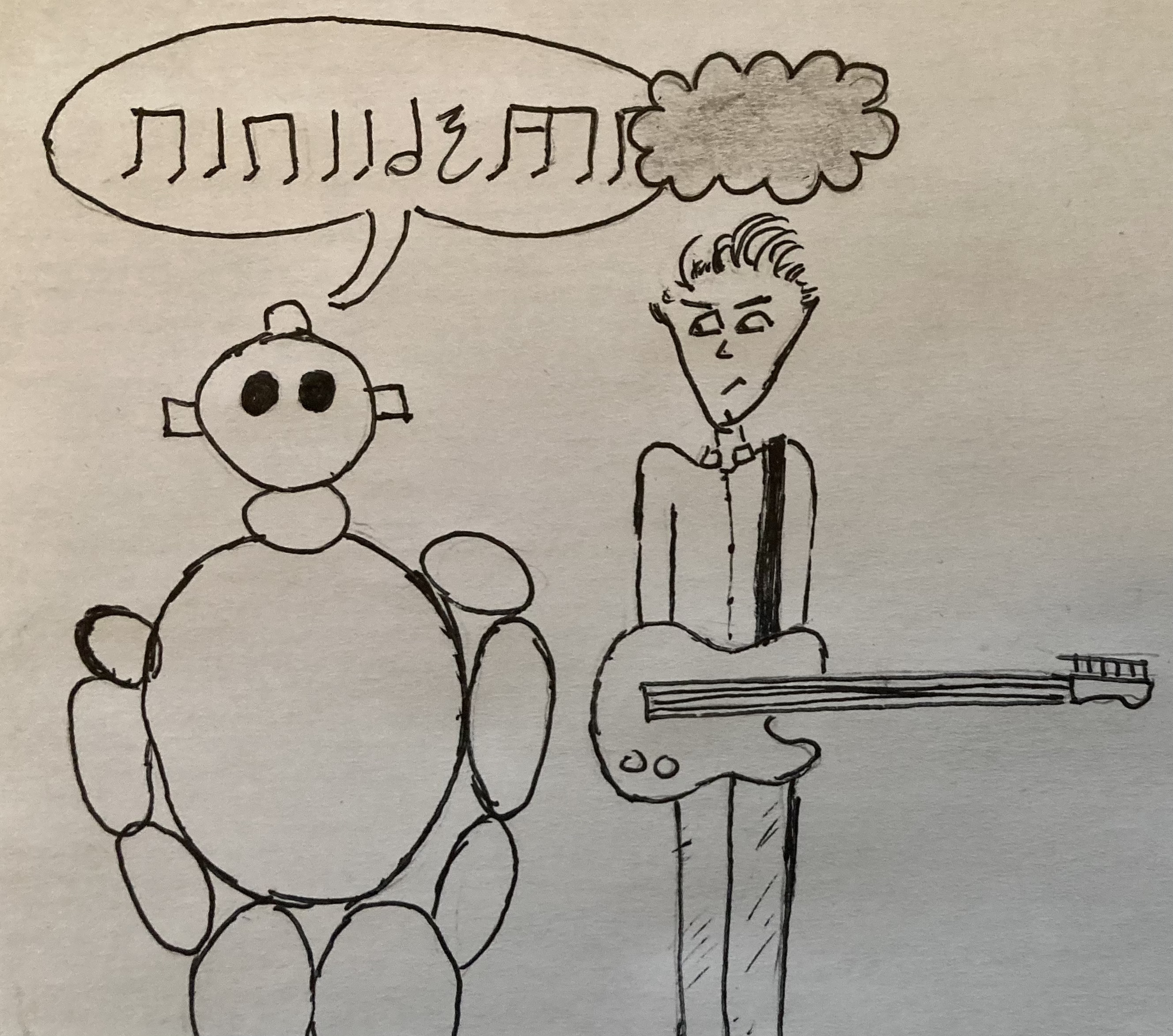
A few months back, I caught a ride from a friend of mine, a fellow musician I’ve known since I was in college. A terrific player and singer, too, a multi-instrumentalist and accomplished audio engineer. He’s someone from whom I take music recs pretty seriously. So when he said he was putting something new on the car stereo, an artist a friend of his had been raving about, I figured I should stop talking and listen closely, too. A modern-day soul/R&B singer with retro ‘70s vibes, my friend told me. Live instrumentation with spot-on period production. That’s what my friend was told by his friend, who had added the music had an almost addictive quality to it.
The production struck me at first. I heard a full band – acoustic drumkit, electric guitar, piano, all that. The band clearly got the assignment, matching the grooves and licks you’d hear on some classic early ‘70s soul LP. Then I zeroed in on the singer – a knockout vocalist, note-perfect, with remarkable command of dynamics. “The breath control,” I murmured after hearing one masterfully phrased half-verse. And the whole bag had what music heads call “the dust” – the elusive atmosphere that registers the recording as “vintage” in the listener’s mind.
Then at one point, seemingly somewhere in the middle of a song, the instruments all paused and the singer held one high note for multiple measures. One note, soloed, hanging in midair, a crescendo and a decrescendo. Bonkers technique. And then the band came back in, and… well, it felt kind of strange.
The song just kept grooving along as it had before the break. That display of that one long-held note – usually a moment like that would be the emotional high point of the song, setting up the mood to drive it home through the end of the track. But… the singer and band kinda picked up where they’d left off. Nothing changed.
I listened a bit more closely to the words themselves. And… they were really vague. The singer was describing or at least referencing emotions, in a sense, adding some imagery for good measure. But I wasn’t hearing a narrative. Who was she singing to? What had happened? What did she think was going to happen next? What does she fear will happen? What does she want?
I had a feeling I knew where this was going almost from the jump, and within a few minutes it was undeniable. This was AI music. This was one of those countless AI artists flooding the streaming audio platforms. Totally uncanny valley effect. It sounded to me like the AI had probably been trained on a small sample of recordings, too. Hence the “addictive” element – AI music gratifies the listener by presenting more of the same, with slight variations. No more to it than the sum of its parts, a sum too small to warrant more than a passing thought.
Here’s what first set off my internal AI detector: Making music that sounds like this is hard. The artist goes through all the trouble if and when they have a reason to. If a young songwriter wants to get an idea over efficiently, the more intuitive move in the 2020s is to do it electronically at home. You don’t need to pay for studio time, you might be able to record entirely by yourself, and the end product sounds on trend because countless emerging musicians are using similar methods. Now, if you’re going to use live instrumentation, you have to bring in other musicians, overdub everything meticulously, or both. Hiring additional musicians, if you don’t already have a regular band, gets expensive fast. Overdubbing one part at a time is time-consuming, and you’re paying for every hour you spend in a professional studio. That whole element of “the dust” – you have to work for it. Capturing that sound is a specialized skill, and producers I’ve known who can do it well are in high demand. Usually it involves recording to a giant analog tape reel, or bouncing digital recordings to the tape reel, or digitally simulating the analog tape sound. Nothing about this is the easy route.
The reason an artist goes through all the trouble of working this way is that they have something to say. They’re thoroughly convinced they have what it takes so say something meaningful. They’ve determined the proper vehicle for their message is this particular production, these particular ways of singing and playing. And they know that effectively communicating what you want to communicate is hard, and you’re up against thousands of artists who also believe they have something to say. So they choose words deliberately, for maximum impact, maximum communication. They align displays of technique, in singing and playing, with suitable emotional messages. The goal is to create something that makes audiences think, I feel this. I relate to this. This connects back to what I want in this life.
In other words, if you want to be a good artist, you have to want something. And AI doesn’t want anything. It doesn’t care about connecting with an audience. It’s not incentivized to be excellent. It’s not engineered to zoom in on the parts of classic songs that do connect, nor to understand what it means to say something the audience hasn’t heard before. All it does is mimic what the prompter tells it to mimic. And the prompter doesn’t want anything, either, other than a quick cash-in. I do believe there’s a Rorschach test effect at work here: When people hear these vague AI outputs, they may interpret what they prefer to interpret. But those are cases where the AI artist hasn’t added anything to the listener’s life. It’s just dredged up something recognizable the listener had already been carrying around.
When I was a music journalist, one of the more dismissive things I could say about a song was, “Nothing happened in that song.” Not the most insulting thing, but casually dismissive. I’m not sure if the line “Nothing happens in that song/EP/album” ever made it to print, because if nothing happens, it’s simply not worth writing about. When I’m listening to a song, and certainly when I’m writing a song, I want something to happen. There needs to be tension and release, or there needs to be high drama with equally high stakes, or the narrator needs to come out of the song with a fresh understanding of a lingering problem, or something like that. When I was listening to AI music in my friend’s car, I was hearing very aesthetically pleasing songs where nothing seemed to happen.
All right, if you’ve read this blog lately, I know what you’re going to say. LaRue, you literally used over-the-counter AI to make fake album covers for two blog posts just this summer. What’s up with the double standard? – Well, those blog posts are parodies. One is a parody of a roundup of classic ‘60s albums, and one is a parody of a new wave or post-punk band’s whole discography. These are things that are supposed to sound familiar, but wrong. It’s supposed to be janky, so if the images are janky too, that’s appropriate for the bit. It took a few prompts to get it to the right kind of janky. Davey Dash and the entire Blues Hegemony originally came out with five guys who all had the same face. I had to re-prompt it specifying additional physical characteristics.*
And if you know me personally, I know what else you’re going to say. LaRue, you reference Obscurest Vinyl in casual conversation, and you even own an Obscurest Vinyl T-shirt. Obscurest Vinyl is AI music. Well, yeah, it is AI music. But the images are designed by a human, one specific human, who also writes the lyrics. And the bulk of the comedy in Obscurest Vinyl is in the lyrics. Things absolutely happen in Obscurest Vinyl. The narrators definitely want things. And most of those things have to do with sexual deviancy.
So all that talk from AI evangelists who try to tell us the promise of AI music is that it can be perfectly engineered to our tastes? That it enables us to make and hear music that feels subjectively perfect to each individual listener? Not buying it. People listen to music because they want to take something away from it, not just appreciate it in the moment. Anyone who wants to tell AI to create some all-surface, no-depth music to play in the background is entirely welcome to do so. Anyone who turns to music to find something they can return to throughout life will make their own decisions.
* Oh, the AI also generated a whole Parlophone Records logo in the first draft. Like, it looked identical to the logo Parlophone used in the ‘60s. I had to come up with a fake label name instead and prompt the AI, because I cannot have potential IP infringement on my blog. We know gen AI is prone to plagiarizing its training materials. So who’s to say any sections of an AI song that resonated emotionally with a listener weren’t just lifted wholesale from someone else’s record?



